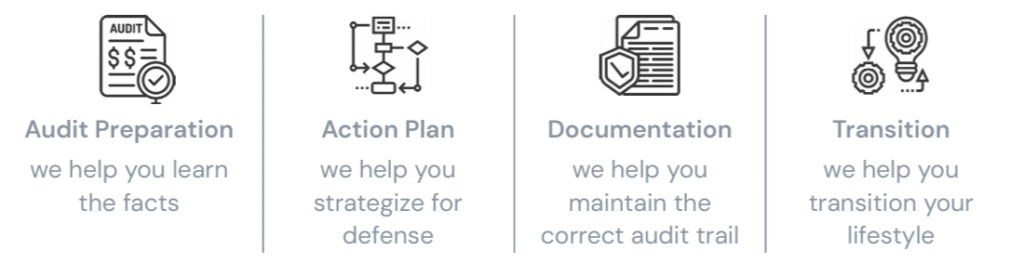


How to be prepared for your state residency audit before you move from a high-income tax state to a NO INCOME TAX state.
THE PROBLEM
Most high-net-worth individuals are completely unprepared for the highly intrusive state residency audit once they stop paying income taxes in their home state. It is a very common problem that high-income earners know all too well. You decided to move out of your high-income tax state and settle in a no income tax state like Florida for example. You purchased a house or are renting a condo. You made sure that you lived the requisite number of days in Florida to count as a state resident. At this point, everything is fine, right? Well, like many others, there is a long list of additional factors that high tax states like New York, New Jersey and California consider before loosening their grip on your tax dollars.
This long, exhaustive list is a lot, even for the most astute taxpayer. The unfortunate result that people realize after the fact is that they owe tens of thousands, hundreds of thousands or even millions of dollars in back taxes. You have worked hard for your money. Those late nights in the office, necessary business trips, and having to miss out on family time have finally paid off. You are now moving to Florida. The only problem: your home state wants a big chunk of your income.
The hidden dilemma – many high-income individuals are taken completely by surprise by the taxes they owe once they move out of their high-income tax state. The misconception is that if they simply spend 183 days or more in their new state, they have successfully established domicile there. Then they stop paying income taxes in their “old” home state. Then they get a letter in the mail either fishing with questions or announcing an audit. This is where the problem begins. Some states like New York have a very intrusive audit process and, if you or someone you know is unlucky enough to be audited by one of these high-tax states, it could make your life miserable.
According to state tax attorneys at Hodgson Russ LLP, roughly half of all taxpayers audited for New York residency lose their cases.1 The state’s residency program remains one of the most aggressive in the nation, and enforcement has only intensified since the pandemic. Keep in mind that the chance of a residency audit is close to 100% for those high-income earners moving from high-income tax states who either stopped paying state income taxes or show reduced income taxes on their state tax return. You see, before the COVID-19 pandemic, many states faced a revenue shortfall (New York, Minnesota, and California). A residency audit is a way to help their budget, especially since most taxpayers are unprepared prior to tax audit. A Freedom of Information Act (FOIA) request submitted by Topia and later reported by Bloomberg Tax revealed that New York State conducted more than 15,000 residency audits in recent years, resulting in assessments exceeding $1 billion.2 Based on these figures, the implied average liability per audit case falls within thousands of dollars, with numerous high-income taxpayers incurring six-figure assessments.3
- Hodgson Russ LLP. (2024, June 25). Updates on New York State & City Audit Programs — Roundtable. New York State Society of CPAs Nassau Chapter. ↩︎
- Mittal, N. (2021, August 19). The tax auditors are coming for ex-New Yorkers. Bloomberg Industry Group (Bloomberg Tax). ↩︎
- Hodgson Russ LLP. (2022, March 30). What to expect in a residency audit. Hodgson Russ LLP. ↩︎
The Audit Triggers
Be aware of those things that can trigger an audit by the state you are saying you are no longer a resident. There are many legitimate circumstances for taxpayers to no longer pay state income taxes; however you must be prepared well in advance of an audit. Some of the triggers include items like:
- Filing a nonresident return when you have a permanent home in the state.
- Not filing a return when there is some connection to the state.
- Filing a nonresident return when you’ve filed resident returns in years prior.
So, what does a high-income individual do if he or she resides in a high-income tax state and wants to properly establish domicile in a no income tax state like Florida? First, do not panic. Clear Advice is here to help. This eBook was written specifically to help high-income individuals like you who are considering or in the process of changing residency.
YOUR SOLUTION
First, accept the fact that there is a lot of hard work that goes into establishing a new domicile correctly, so that it passes muster when the auditors come calling. If you have lived part of the year in another state, even if it exceeds 183 days (six months and a day), you’re not necessarily in the clear. You must “properly” establish domicile. Properly establishing domicile is more than simply renting or buying a condo and “living” in the Sunshine State for 183 days or more. It is more than changing your driver’s license or voter registration. If you are audited, the burden of proof is on you to produce the desired evidence that you moved to a new location with the “intent” to remain there permanently. The questions go deeper than you would expect.
Properly Establishing Domicile
To properly establish domicile outside of your high-tax state, you must follow and actively maintain some very elaborate rules. One big one is where do you maintain a residence as your “primary abode”. How do you do that? To effectively answer that question, you must prove that this is your primary residence by showing things like:
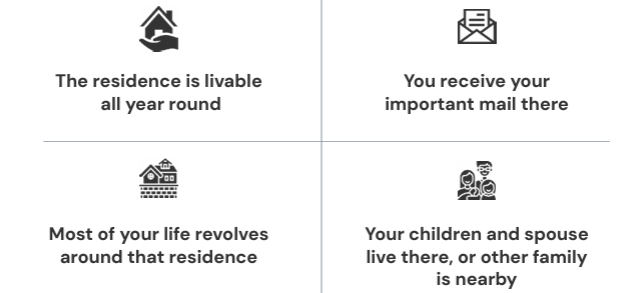
In short, the issue here regarding the establishment of domicile is all about proving your intent to the tax authorities. Does your life revolve around this residence? Or does this residence get some use, but most of your life revolves around your residence located in the high income tax state? The concept of intent is extremely subjective and decided based upon the standards of the state auditor assigned to you, so no two cases look alike.
Understanding Domicile vs Residency
Some high-income tax states like New York have two ways in which they determine whether you are a resident of New York State. The first is the domicile Test and the second is the Statutory Residence Test. Taking New York as an example, the domicile Test is implemented to determine if you have your primary, permanent and one true home in New York. This test is based on intent and is subjective. The Statutory Residency Test (six month and a day rule) is to help auditors determine if an individual maintains a “Permanent Place of Abode” in the state of New York and spends more than 183 days in each of the year in question. Even spending one hour in the state could be considered one full day in the eyes of an auditor (The same applies for residencies in New York City subject to city tax).
An audit by a high-income tax state can be extremely invasive, asking for everything from your federal tax return, utility bills, school tuition bills and more. They are so intrusive that it has become commonplace for state auditors to subpoena cell phone tower location records from your telecom company. It sounds outrageous, but the high-income tax state will regularly go to great lengths to determine domicile in order to receive their taxes.
Be Prepared. You must stop and ask yourself why so many people fail the audit and owe back taxes? Many high-income individuals simply do not have the time, desire or discipline to develop and manage a process that will successfully organize their activities and records to effectively satisfy a state tax audit. Many make their decisions based on misinformed pre-conceived notions regarding the factors necessary to prove intent. It can become a very costly conundrum if you are not properly prepared in advance.
TAKE ACTION
Imagine having access to a platform that provides you with a 360-degree view of everything needed to fully prepare for a residency audit. Imagine a company that helps you identify and properly document significant ‘change’ events, maintains records important to an audit trail, and works with you to create a unique strategy based on your individual circumstances. Imagine a turnkey resource that can give you peace of mind and can save you thousands of dollars, if not more. Partnering with a change of domicile expert will help you:
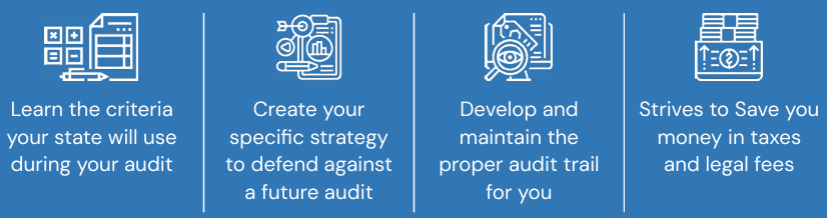
It is critical to be prepared long before receiving your state tax audit letter in the mail. How will you respond when you get that letter? Will you be prepared?
WHO WE ARE
We are Clear Advice, a firm that helps individuals and business owners transition from high-income tax states to Florida and other no-income-tax states. Our mission is to demystify the change of domicile process while saving you time and money.
Because the process can be long and arduous, Clear Advice helps take the pain out of the change of domicile process while helping you protect the income you have worked so hard for.
Clear Advice offers a comprehensive streamlined process to track and monitor the change of domicile process. Concierge ‘white glove’ services are available at each step to make your transition as simple and painless as possible.